The Best OET Preparation for
Healthcare Professionals

StudyOET is StudyMEDIC’s specialised OET preparation platform, created to support healthcare professionals preparing for global career opportunities. Whether you are a doctor, nurse, or allied healthcare professional planning to work, study, or register abroad, StudyOET offers structured OET courses designed to help you prepare with confidence. Our training focuses on all four OET sub-tests—Listening, Reading, Writing, and Speaking—with expert guidance, focused practice, mock tests, and personalised feedback.
With a practical, healthcare-focused approach, our OET online course helps you understand the OET exam format, strengthen your English communication skills, and improve your test-taking strategies. At StudyOET, our goal is to make your OET preparation structured, effective, and closely aligned with the communication skills required in real healthcare settings.
StudyMEDIC is a global medical education platform offering structured preparation for postgraduate medical exams, licensing exams, entrance exams, and professional skill development. With a strong focus on expert-led learning and practical preparation, StudyMEDIC supports healthcare professionals across multiple specialties and career pathways.
StudyOET is its dedicated OET preparation vertical, offering focused OET courses for doctors, nurses, and allied healthcare professionals. Our OET classes are designed to build the language and communication skills needed to succeed in the OET exam through structured training, regular practice, mock tests, and expert guidance.
StudyOET offers the best OET online coaching, combining expert guidance, focused practice, and structured preparation to help healthcare professionals build the skills and confidence needed to perform well in the OET exam.
The Occupational English Test (OET) is an English language proficiency exam designed specifically for healthcare professionals. It evaluates how effectively candidates can understand and communicate in situations commonly encountered in healthcare settings. The OET exam assesses four key language skills—Listening, Reading, Writing, and Speaking—through profession-related tasks and real-world scenarios. Listening and Reading are the same for all candidates, regardless of profession, while Writing and Speaking are tailored to the candidate’s profession.
Unlike general English tests, OET focuses on communication within clinical and professional environments, including patient interactions, healthcare information, workplace correspondence, and professional conversations. It is widely used by healthcare professionals who need to demonstrate their English language ability for registration, employment, or career opportunities in countries like the UK, USA, Australia, Canada, New Zealand, Ireland, and Singapore.
There are no specific academic qualifications or age criteria set by OET for candidates to take the exam. OET is designed specifically for healthcare professionals who need to demonstrate their English language proficiency for professional registration, employment, study, or career opportunities in English-speaking healthcare environments.
The OET Test is available for 12 healthcare professions: Dentistry, Dietetics, Medicine, Nursing, Occupational Therapy, Optometry, Pharmacy, Physiotherapy, Podiatry, Radiography, Speech Pathology and Veterinary Science.
Candidates should check the eligibility and score requirements of the regulatory body, employer, university, or organisation they are applying to, as these requirements may differ depending on the profession, country, and purpose of application.
OET has no fixed limit on test attempts, and candidates may retake the exam as needed. Result currency depends on the accepting body, with many regulators requiring results within two years.
The OET exam assesses four essential English language skills: Listening, Reading, Writing, and Speaking, with tasks based on communication commonly encountered in healthcare environments.
Listening: The Listening sub-test takes approximately 40 minutes and includes 42 questions across three parts. Candidates listen to patient consultations, short workplace conversations or monologues, and longer presentations or interviews involving healthcare professionals.
Reading: The Reading sub-test lasts 60 minutes and contains 42 questions across three parts. It assesses the ability to quickly locate information, understand workplace texts, and interpret longer healthcare-related articles.
Writing: The Writing sub-test lasts 45 minutes and includes one profession-specific task. Candidates are usually required to write a 180–200 word formal letter using information provided in case notes or other healthcare documentation.
Speaking: The Speaking sub-test takes approximately 20 minutes and consists of two profession-specific role plays. Candidates take the role of a healthcare professional while the interlocutor acts as a patient, relative, or carer.
Listening and Reading are common across all OET professions, while Writing and Speaking are tailored to the candidate’s healthcare profession.
OET exam dates are available throughout the year. OET on Computer is generally available from Monday to Saturday, offering candidates greater flexibility when choosing a test date. OET on Paper is conducted on scheduled dates, usually on weekends and typically around twice a month. Test availability may vary depending on the country, test centre, profession, and delivery mode.
Booking the OET exam is completed online through the official OET website. Before starting, candidates should decide their preferred test mode, location, and test date, and keep a valid identification document and payment method ready. Availability may vary depending on the country, profession, and test centre.
Candidates can select OET on Paper at a test venue, OET on Computer at a test venue, or OET@Home where available. Search for a preferred city or country to view available test centres and test dates.
An OET account is required to complete the booking. Enter personal details carefully and ensure the name and identification information match the document presented on test day.
OET is profession-specific, especially for the Writing and Speaking sub-tests. Candidates should choose the profession that matches their healthcare background and the requirements of the organisation where they plan to use their results.
Select a suitable OET exam date from the options available for the chosen location and test mode. As availability differs between centres and delivery modes, candidates planning for a particular period should check and book in advance.
Candidates must use an accepted, valid identification document for booking and test-day verification. A passport is commonly accepted, while other government-issued identification may be allowed depending on the testing country. All details should match the information in the OET account.
Before payment, check the selected profession, exam date, test mode, location, personal details, and identification information. Once a test date is selected, candidates have 15 minutes to complete the booking and payment process, so it is best to keep an accepted payment method ready.
After successful payment, candidates receive a confirmation email and can view their booking details through their OET account. The confirmation should be checked carefully for the correct date, location, and test mode.
Important Points Before Booking
Candidates should confirm the OET score requirements of the regulatory body, employer, university, or organisation where they intend to submit their results. Requirements can vary by profession, country, and purpose of application.
Candidates who require testing accommodations should follow OET’s official process and submit the required supporting documents within the specified timeframe. Those who need to change or cancel a booking should also check the latest rescheduling and cancellation rules, as deadlines, fees, and conditions may vary by test mode.

The Digital Campus of StudyMEDIC








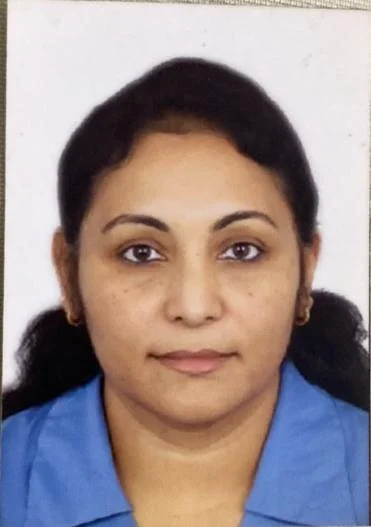
Meet our experienced StudyOET trainers, committed to helping healthcare professionals prepare confidently for the OET exam.

Chief Mentor
Mentor

Mentor
Explore our YouTube channel for OET tips, skill-focused lessons, exam strategies, and expert insights designed for healthcare professionals preparing for OET.
